Why grassroots numbers matter for the UK betting community
I started taking the UK baseball-and-softball scene seriously about five years ago, when a punter friend mentioned that his nephew had joined a club in Kent and was suddenly pestering him to explain pitching mechanics over Sunday lunches. That story repeats across the country with quiet regularity now. Baseball in the UK isn’t a fad. It’s a slow-build participation surge that has been gathering momentum since the 2010s, and the numbers underneath it explain why MLB betting volume from UK customers has grown alongside it.
BaseballSoftballUK, the national governing body, reports that participation has more than doubled across the past decade. From roughly 10,000 active players a decade ago, the count is now 24,000-plus, with ages ranging from 7 to 70. The 2021 club register listed 90 teams across 48 clubs, and the registered universe has continued to expand year on year as new clubs form and existing ones add second and third squads.
This article walks through the BSUK numbers in detail, the university league emergence through BUCS, the LA28 Olympic tailwind, and how grassroots growth feeds into the broader UK fan and bettor pipeline. The connection between people playing the sport and people betting on it isn’t direct, but it’s real – and understanding the underlying participation trend gives UK punters context for why MLB markets at UK-licensed books have grown the way they have.
BSUK numbers and growth across the participation base
Baseball and softball participation in the UK reached approximately 24,000 active players across the most recent BSUK reporting period, with an age range from 7 to 70 covering everyone from junior leaguers to recreational adult players. That’s a 140% increase from the roughly 10,000 active players a decade earlier – a growth rate that few minor sports in the UK have matched across the same period.
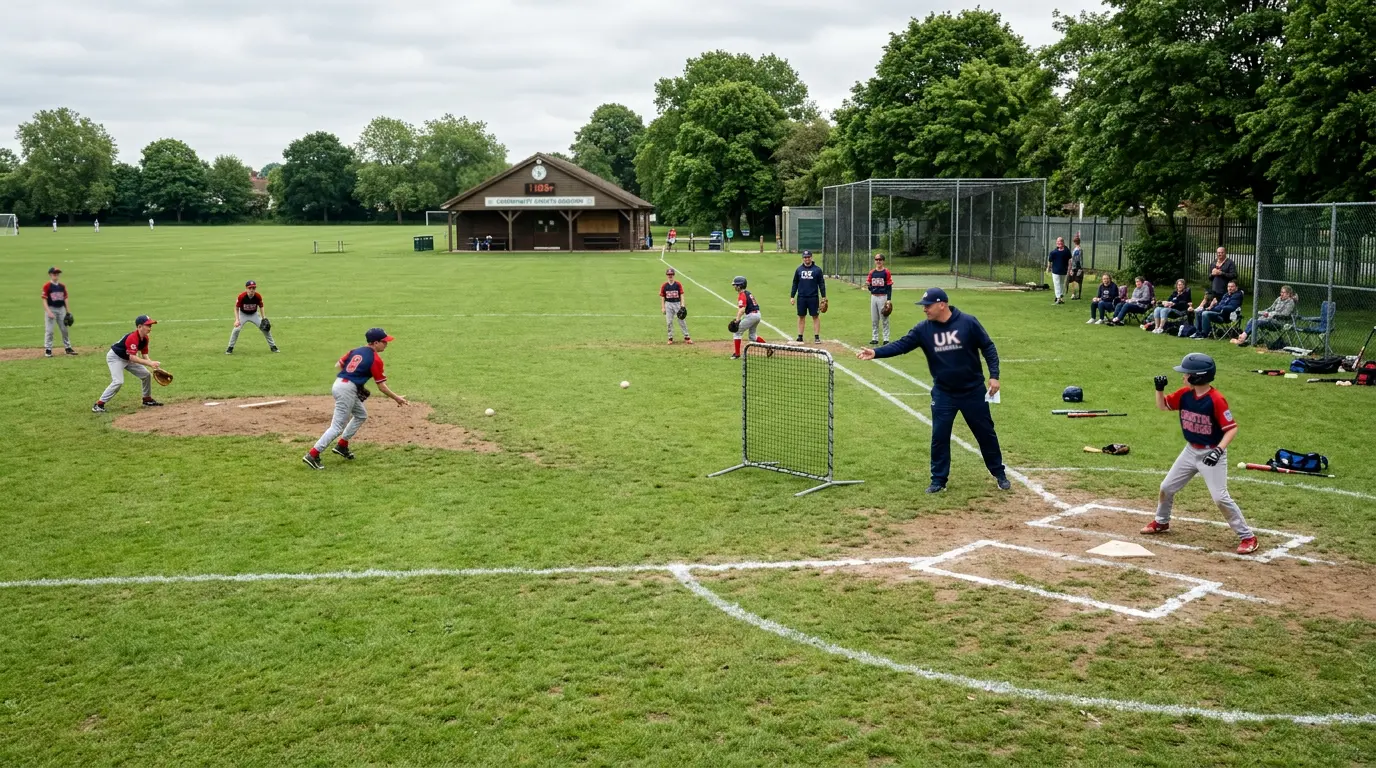
The 2021 registered club count was 90 teams across 48 distinct clubs, distributed unevenly across the country with concentrations in London and the South-East, the Midlands, and the North-West. Approximately 1,500 of the 24,000 players are registered competitive baseball players in adult leagues, with the remainder distributed across recreational softball, youth baseball, and university programmes. The pyramid is wider at the youth and recreational base than at the competitive top, which is the typical structure of a developing sport in a market without a deep cultural baseball tradition.
Growth drivers across the past decade have been varied. Population mobility has played a part – North American expats and their families have contributed to participation in specific catchment areas – but the larger driver has been organic UK uptake, particularly among teenagers and university students who came to the sport through video games, podcasts and global broadcast access to MLB rather than through any local family tradition.
Infrastructure is the constraint. Diamonds are expensive to maintain, mixed-use grounds rarely accommodate the dimensions baseball requires, and most UK clubs play on imperfect facilities that wouldn’t pass minimum standards in a country with a deeper baseball tradition. The growth has happened despite the infrastructure, not because of it.
Funding flows from a combination of governing-body grants, club subscriptions, and slow-build corporate sponsorship that follows the London Series visibility each summer. The 2024 London Series fixtures alone generated a £56.5 million economic uplift for London’s economy, and a small share of that translates into general baseball-in-the-UK awareness that helps clubs recruit and retain.
University and BUCS baseball as a development engine
The British Universities and Colleges Sport organisation admitted baseball in 2020, formally bringing the sport into the BUCS competitive structure. As of the most recent reporting, there are approximately 75 university baseball teams across 35 institutions, playing in regional leagues that culminate in a national championship.
BUCS admission was a structural milestone. It moved baseball from informal university clubs into a sanctioned competitive framework with funded inter-university fixtures, formalised rules, and a recognisable pathway for student athletes who want to combine academic study with competitive baseball. Universities now have a reason to support baseball clubs as part of their sports portfolios, and the access to facilities, equipment grants, and travel budgets that BUCS recognition unlocks has materially changed the resourcing question.
The talent pipeline implications are real. UK-raised university players returning to clubs after graduation are a meaningful share of the new adult-league registrations each year, and they bring competitive standards higher than the casual recreational players who dominated the early 2010s scene.
The BUCS structure also creates a betting-adjacent fan base. University students who play baseball are disproportionately likely to follow MLB closely, watch the London Series, subscribe to MLB.TV, and – once they’re old enough – bet on the sport at UK-licensed operators. The pipeline from playing the sport at university to betting on the sport as a graduate isn’t formal, but it’s observable in the demographic data UK operators publish about their MLB customer base.
What the BUCS league hasn’t yet produced, and may not produce for another decade, is a UK-developed talent that progresses through the MLB minor-league system. UK youth players hoping to pursue serious baseball at a higher level still typically have to travel to North America in their late teens.
LA28 Olympic tailwind and what it means for UK baseball
Baseball and softball were confirmed for the Los Angeles 2028 Olympics in 2023, returning the sport to the Games after its absence from Paris 2024. The confirmation was significant for emerging markets like the UK where Olympic recognition shapes funding flows.
The mechanics of how this benefits UK baseball: Sport England funding allocations weight Olympic sports more heavily than non-Olympic sports, and the LA28 confirmation gives BSUK a stronger case for additional grant funding through the cycle leading up to the Games. National governing bodies in Olympic sports typically see funding increases in the four years before a Games, and that funding flows through to club-level support and youth pathway investment.
Whether baseball remains on the Olympic programme after LA28 is genuinely uncertain. The IOC has historically rotated baseball/softball in and out of the programme based on host-nation interest, and Brisbane 2032 has not yet confirmed inclusion. Australia has a strong baseball culture, which is a positive signal, but final 2032 programme decisions won’t be settled for several years.
The UK is unlikely to send a baseball team to LA28. The qualifying pathway for international baseball is brutally competitive. What the Olympic platform does provide for UK baseball is visibility – broadcast hours during a UK-friendly Olympic schedule and mainstream media attention to a sport most British audiences only encounter through highlight reels.
The longer-term ambition voiced by some UK baseball stakeholders is qualification for Brisbane 2032, which would require a meaningful step up in performance, depth and coaching infrastructure. The pathway is uncertain, but the LA28 confirmation creates a four-year window where development funding may be more available than it has been at any point in UK baseball history.
From fan to bettor: how grassroots growth feeds the betting pipeline
The relationship between participation and betting is indirect but consistent. People who play a sport watch that sport more frequently than people who don’t, and people who watch a sport closely are more likely to bet on it. The participation surge in UK baseball over the past decade has translated into a small but measurable expansion of the MLB-betting customer base at UK-licensed operators.
The demographic pattern: UK MLB bettors skew younger than the average UK sports betting customer, with a notable concentration in the 25-34 age band that aligns with the cohort that played baseball at university through the 2015-2026 BUCS expansion. This cohort is also the most likely to subscribe to MLB.TV, attend the London Series in person, and engage with MLB content on social media – the markers of a fan base that translates into informed betting behaviour rather than casual recreational ticket-writing.
The implication for UK punters reading this: the people you’re competing against in MLB markets at UK books are increasingly fans who actually understand the sport, rather than tourists betting recreationally on a foreign curiosity. Markets are sharper than they were five years ago because the customer base is sharper.
The London Series is the most visible touchpoint between UK fans and live MLB action, and the analysis on MLB London Series betting from the UK covers how that specific weekend creates concentrated market opportunities that grow alongside the grassroots base described here.
How many baseball clubs are currently active in the UK?
Will baseball remain on the Olympic programme after LA28?
Material created by the team DIAMONDLINE