
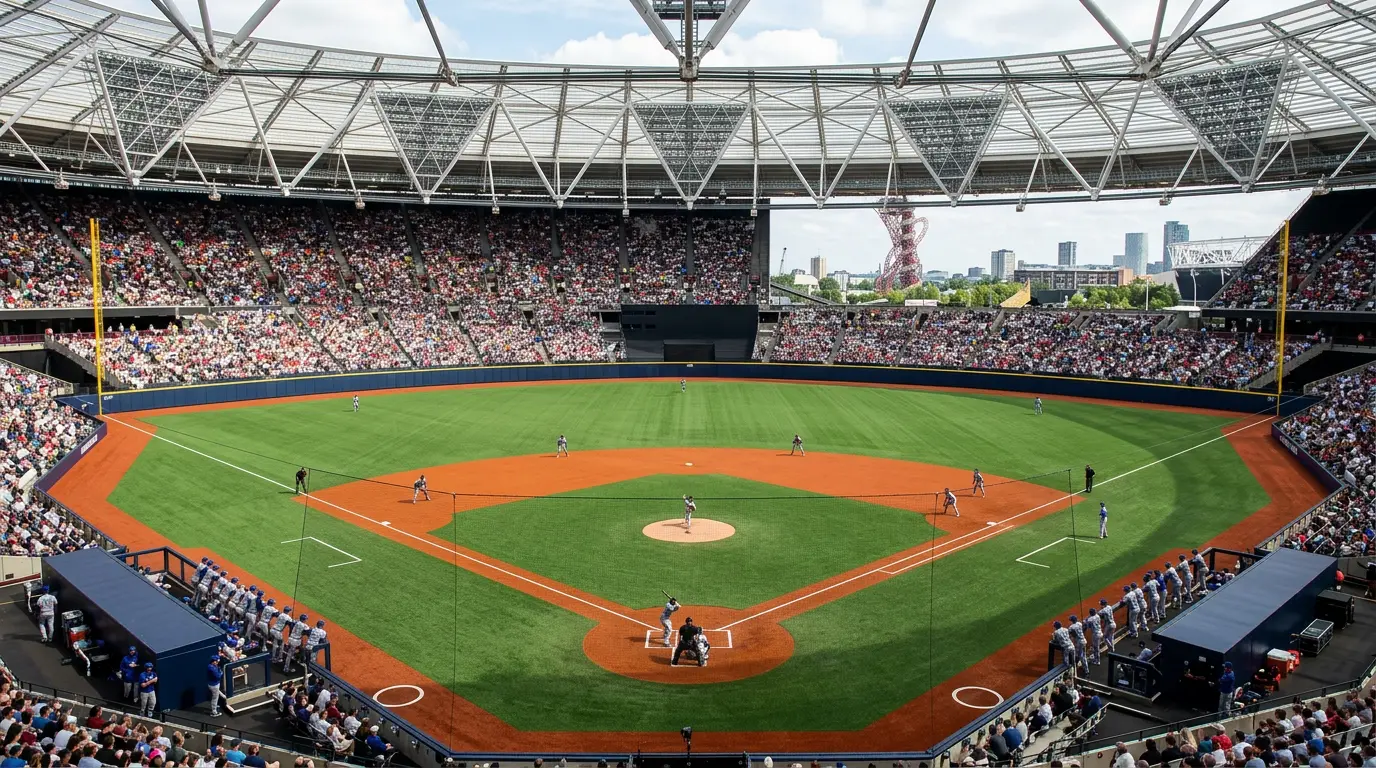
The first London Series I bet on the wrong way
I made a particular kind of mistake in 2019 that I want to walk you through, because it’s the same mistake plenty of UK punters are still making. Yankees-Red Sox, the inaugural London Series. I treated the pricing exactly like a regular-season AL East series and staked accordingly. Two games, twenty-four runs in game one, seventeen in game two. Forty-one runs across two ballgames. The over-under projections at the books had been adjusted, but not by anywhere near enough, and the under tickets were dust before the third inning of game one.
What happened that weekend wasn’t a fluke. London Stadium isn’t a baseball stadium – it’s an athletics venue temporarily reconfigured for two days a year – and the dimensions, the playing surface, the way fly balls behave in the converted bowl all push the run environment well above the league average. The market knows this now. The first time, plenty of us learned the hard way.
The London Series matters to UK punters more than any other regular-season MLB fixture, both because it’s the only chance most of us get to watch the league live and because the unique conditions create a few real edges that don’t exist anywhere else on the schedule. Worth understanding properly before another series rolls around.
What the attendance numbers tell you
The history is short but the figures are clean. The 2019 inaugural series sold out 120,000 tickets in less than an hour – a market signal about UK appetite that nobody had really priced before. Across three editions in 2019, 2023 and 2024, around 337,000 spectators have attended MLB games at London Stadium. The 2024 World Tour series alone drew 108,956 fans across two games.
The economic impact is comparably significant: MLB and SportsTravel reporting put the 2024 series uplift at an estimated UK£56.5 million for London. That’s not a number the betting markets need directly, but it tells you why MLB keeps coming back and why the league treats London as a strategic foothold rather than a one-off marketing exercise.
What the attendance figures mean for the pricing is straightforward. The London games consistently produce more runs per game than the same teams average across a regular-season month. Some of that is the playing surface and the dimensions. Some of it is the schedule pressure – teams arrive jet-lagged, bullpens get used in unusual rotations, and starters often work shorter outings because nobody wants to push a young arm through five time-zone shifts. The pricing has tightened over four editions, but the over has historically been the tide-rising side.
Markets the UK books actually offer
For a London Series, expect the standard suite plus a handful of London-specific specials. Moneyline, runline at -1.5/+1.5, totals, first-five-innings markets and player props all list. Where the books differ is at the prop level and on the special markets that crop up specifically for the trip.
The standard player props you’ll see on every game – strikeouts, total bases, hits, home runs – get widened ranges for London. Books expect more variance because the conditions are unfamiliar to the players. A starter’s strikeout line might sit at 6.5 for a regular-season home game and 5.5 for the same starter in London, on the assumption that he’ll be pulled earlier and the strike zone may play differently for both umpires and fielders adjusting to the converted bowl.
London-only specials are where the value occasionally hides, or doesn’t. You’ll often see “first home run hit at London Stadium” markets, “total runs across both games” composite markets, and team-specific props that lean heavily into the visiting fanbase angle. These markets are usually thin on liquidity, which means the books price them conservatively – favouring themselves – because they can’t easily lay off action. I treat them more as entertainment than core staking opportunities.
One market I do watch carefully is the team-totals over for whichever side is the road favourite. Road favourites in London have historically gone over their team total at a higher rate than across the regular season. The hypothesis I work from: road clubs travel slightly better than hosts in this specific scenario because the host designation is artificial – both teams are travelling. That removes part of the home-team baseline advantage.
The travel and jet-lag edge
This is the part competitors don’t really cover. UK punters have an information edge here because we live the time-zone shift in the opposite direction every time we travel west, and we can think clearly about what five-to-eight hours of jet lag does to a professional athlete who’s expected to perform at peak.
The simplest version: hitters degrade faster than pitchers under jet-lag conditions, but pitchers’ command degrades more measurably than their velocity. So you’ll see strikeouts hold up reasonably well for elite arms – the stuff is still there – while walks and elevated pitch counts climb noticeably. That sets up a specific pattern: strikeout overs are bettable for true ace-tier starters, but their inning totals run the risk of hitting because they get pulled earlier on elevated pitch counts.
Hitters tend to lose timing on the off-speed first. Fastball reaction is the last thing to go in fatigue states. So I lean toward overs on hit props for power-fastball pitchers facing jet-lagged lineups, and unders on contact-rate props in the same scenarios. The slugging numbers in the inaugural London Series support this – the run-scoring came less from sustained rallies and more from individual mistakes left over the plate, the kind a fresh hitter punishes and a tired one fouls off.
The travel direction matters too. Teams flying east to London have it harder than teams flying west home from London. The eastbound disruption to circadian rhythm is well established in athletic-performance literature. So if the same two clubs play a regular-season series in the US two weeks after London, I’m watching for the team that travelled east and is back on home soil – they often play better than expected against the ratings line because their normal sleep pattern resets faster than the public market gives them credit for.
Economic and fan context – and why this matters for betting
The MLB Europe operation views London as a long-term commercial play, not a single-event exhibition. Their Vice President, Ben Ladkin, has talked about the value of the audience-acquisition aspect – using the partnerships around the London Series to draw eyeballs from new audience segments who could become long-term MLB fans. That commercial logic shapes how the league chooses matchups: marquee franchises, star-power rosters, narrative-heavy series.
For betting purposes, this matters because the marquee-pairing pattern means the public-money tax on certain teams is amplified in London. Yankees and Dodgers in particular get priced more aggressively against by sharp money in London games than in regular-season AL East or NL West fixtures. The reason is the same one Bryant Simon at Temple University laid out about the 2024 World Series – two storied franchises with real star power create a dream marketing matchup, and that visibility pulls public money toward the household-name side.
The local UK fan context also nudges things. Cheering at London Stadium tilts toward whichever side has the more recognisable star, almost regardless of nominal home/away designation. That fan energy doesn’t move scores directly, but it does affect the umpire psychology and the pace at which the visiting starter operates. Subtle stuff. Worth noting.
How I’d forecast future series
The fixture list is announced a year ahead, but the pricing only firms up in the spring of the relevant season. My preparation timeline runs roughly like this. From January, I track the rotations of both clubs to forecast which starters are most likely to take the hill. Six weeks out, I shadow-price the totals based on the previous year’s London performance and the current run environment. Two weeks out, I look at injury reports and bullpen workloads from the most recent regular-season series. Final 48 hours, I check umpire assignments – the umpires designated for London Series duty are usually senior crew, and their strike-zone tendencies are publicly tracked.
One thing I’ve learned not to do: don’t bet futures on London Series outcomes weeks ahead of the games. The books open conservatively, the market thins out, and the line you’ll see seven days before first pitch is usually better than the line two weeks out. Patience pays.
If you’re new to the UK side of MLB and want broader context on how the sport’s grown its footprint here, the data on grassroots baseball participation across the UK covers the pipeline from local leagues into a future MLB-watching public.
Do London Series totals trend over or under the season-long team averages?
Are special London-only prop markets available at UK bookmakers?
Material created by the team DIAMONDLINE