Why NPB pulls UK punters out of bed at 10am
I started taking NPB seriously about six years ago, after a colleague who’d lived in Tokyo for a decade kept telling me the lines were softer than MLB’s by a wide margin. He was right. The first season I tracked it properly, I closed at better numbers than I opened on roughly three out of every four bets, which almost never happens with a major American league.
Nippon Professional Baseball runs from late March to late October, with the Japan Series usually finishing by early November. From the UK, most regular-season games tip off between 9 and 10:30am – Central League afternoon starts in Tokyo land in the British morning, while Pacific League evening fixtures are often a 10am affair. That timing matters more than people think. You’re betting before the day’s MLB injury news has even surfaced, in a market that some UK books still treat as an afterthought.
This article walks through the structural differences between NPB and MLB markets, how UK-licensed sportsbooks list the league, and where the pricing inefficiencies actually live. I’m not selling you a system. I’m describing what I’ve seen line-by-line over hundreds of NPB tickets, and where I think a careful UK punter can find a quieter edge than the saturation-bet MLB markets allow.
NPB format and season structure
The first thing that throws UK bettors crossing over from MLB is the format itself. Twelve teams, six in each league, 143 regular-season games per club – twenty fewer than MLB’s 162. Central League versus Pacific League follows the same conceptual split as American League versus National League, but the operational differences are bigger than people realise.
The Pacific League uses the designated hitter in all games. The Central League used pitchers as batters in non-interleague play until 2026, when the league formally adopted the DH. That recent change matters for over/under pricing on Central League games – totals that historically sat in the 6.5 to 7 range have crept up half a run on average, and not every UK book has fully repriced the historical baseline. I still see lines that look like 2023-era numbers on midweek Central League undercards.
The postseason structure is called the Climax Series. Top three teams from each league qualify. The first stage pits the second seed against the third seed in a best-of-three played at the second seed’s home park. The winner advances to the Final Stage against the league champion in a best-of-six – but the league champion starts with a one-win advantage. So the second-stage challenger has to win four out of five just to take the pennant. That structural quirk means underdog futures on non-pennant winners are mathematically punishing in ways that don’t translate cleanly from MLB postseason base rates.
The Japan Series itself is best-of-seven, decided in late October or early November. Designated hitter is used in alternating games depending on which league hosts. If you’re betting it from the UK, expect 10am or 11am first pitches with the occasional afternoon game on weekends.
Markets UK books typically list
Coverage is uneven, and that’s where this section gets practical. Major UK-licensed operators – bet365, William Hill, Sky Bet, Paddy Power, Ladbrokes, Coral – list NPB during the regular season, but with a thinner menu than MLB. You’ll reliably get the moneyline (called match winner here), the runline at 1.5 runs, and the total. Half-game and innings markets exist on some books for premium fixtures and disappear for midweek matinées.
Player props are where the gap really shows. MLB props on UK books now extend to strikeouts, hits, total bases, home runs, walks, and increasingly to pitch counts and exit velocity derivatives. NPB props are mostly limited to home run scorer, anytime-hitter-to-record-a-hit, and pitcher strikeouts on Friday night marquee games. If you’re a prop hunter who likes player-by-player edges, NPB will frustrate you outside of a handful of stadiums and starters.
Futures are the other thin spot. League winner, Japan Series winner, and team season-totals are typically up before opening day, but the markets are illiquid and limits are low. You might get a line at +650 on a Pacific League dark horse and find that £200 is the maximum stake before the price moves three steps. That’s not necessarily bad – it tells you the book has a healthy fear of being wrong – but it constrains anyone trying to deploy serious size.
One area worth flagging: live in-play coverage on NPB at UK books is materially worse than MLB. Latency is longer, markets suspend more frequently, and per-pitch in-play markets are rare. If you’re a live bettor, this is closer to a pre-game-only league for practical purposes. The 27.4 billion online bets and spins logged across UK gambling in the third quarter of the 2025-26 financial year are heavily weighted toward higher-velocity products, and NPB simply doesn’t fit that pattern from a book’s perspective.
Style differences vs MLB you actually need to price
This is the section that pays for the trip. NPB plays differently from MLB in ways that directly affect totals, run distributions, and prop expectations.
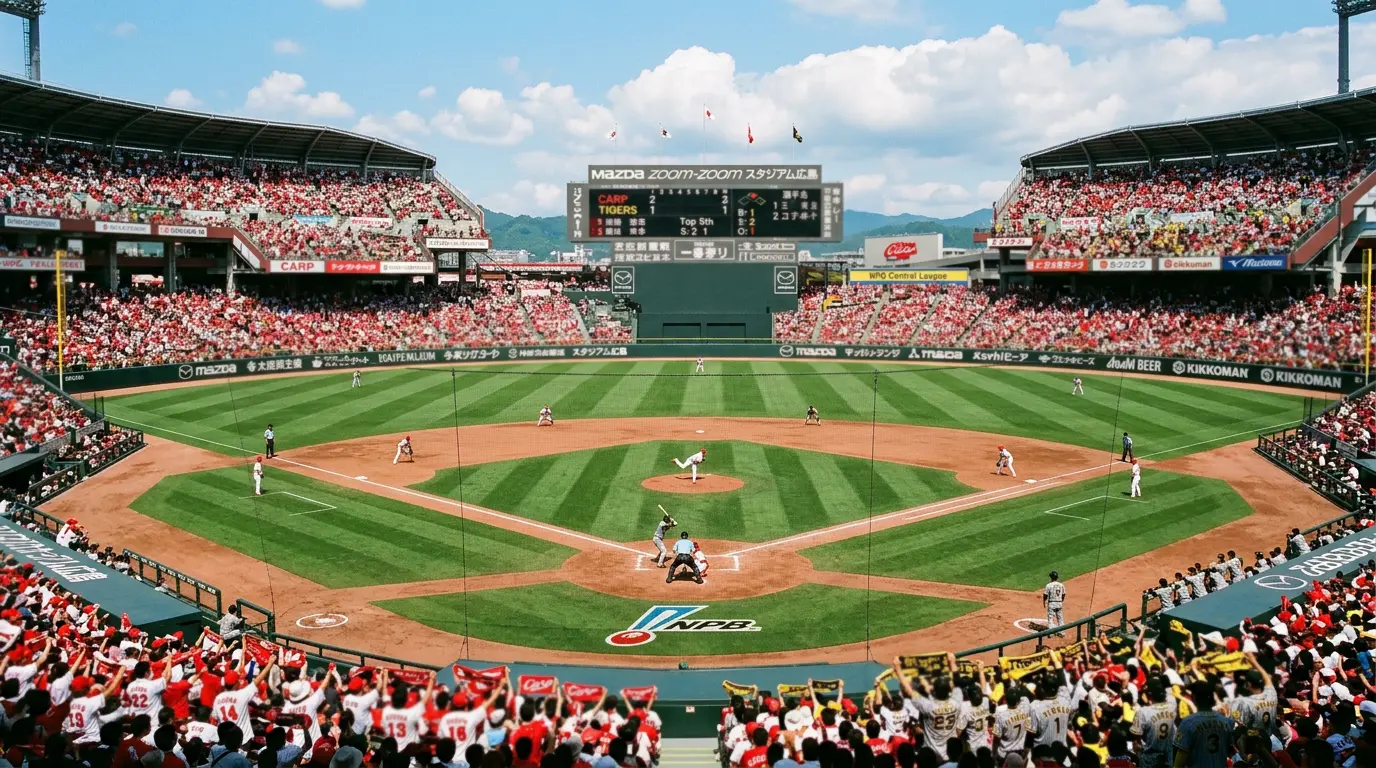
Smaller ballparks, but lower exit velocities. Most NPB parks have shorter outfield dimensions than typical MLB venues, which would suggest higher home run rates. The opposite is true. The baseball used in NPB is slightly different in seam height and core compression compared to the MLB ball, and the league’s typical hitter profile generates lower exit velocities. League home run rates are noticeably below MLB averages, and totals reflect this – typical NPB game totals run between 6 and 7.5 runs, where MLB has sat closer to 8.5 in recent seasons.
Bunting, situational hitting, and contact baseball remain genuinely strategic. NPB managers will sacrifice in the second inning of a tie game in ways that would get an MLB skipper laughed out of the dugout. This compresses scoring distributions, makes blowouts less common, and makes the runline at 1.5 a different proposition than it is in MLB. Underdog plus-runline tickets in NPB win more often than you’d expect coming from American baseball, but the prices reflect that – getting +120 on the dog at 1.5 runs is rare.
Pitching usage is also distinct. NPB starters routinely throw 110 to 130 pitches in regular-season games. Bullpen reliance is lower than MLB’s increasingly bullpen-heavy approach. That has implications for first-five-innings markets and for live totals after the starter exits – if you understand a manager’s hook tendencies, you can fade or buy into the late-inning total movement.
Rob Manfred, speaking on MLB’s international ambitions, said audiences in Korea and Japan are a key part of where the sport’s growth is coming from. He was talking about MLB’s global push, but it cuts both ways – NPB is a serious developmental and stylistic ecosystem in its own right, and treating it as MLB-lite costs you money.
Weather matters more, too. Several NPB parks are domes, which removes weather noise, but the open-air parks face a humid summer that drags fly balls down. If you’re modelling totals, separating dome games from open-air August games is the single most important environmental adjustment.
For UK punters who already like reading KBO betting markets, the stylistic similarities between Asian leagues – small ball, lower run environments, foreign-player roster impacts – translate well, even though the leagues are not interchangeable.
Time-zone discipline and UK staking
This is the operational section, and it’s where most UK bettors I know lose discipline on NPB without realising it. Games go off in the morning. You’re either betting before bed the night before, or you’re rushing pre-pitch with a coffee and incomplete information.
My approach: I price the slate the night before using the previous day’s results, projected starters, and weather. I set my limits and my closing prices. If a number opens at my closing price or worse the next morning, I pass. If it opens better, I take the smaller of either my standard unit or whatever the book’s limit allows on that game. I do not chase live, and I do not wake up at 9am and decide on impulse – that route ends with bad bets at bad numbers.
UK gambling participation hit 48% of adults in the four weeks before the most recent Gambling Commission survey, and the temptation to be in action constantly is real. NPB is not a league for that mindset. The volume is wrong, the timing is wrong, and the lines move sharply when the right people are on them.
Why do NPB totals tend to land lower than MLB totals?
Which UK-licensed bookmakers consistently price NPB regular-season games?
Material created by the team DIAMONDLINE