Why a heavy-favourite team is the hardest to price
The first lesson I learned about betting the Dodgers, the hard way, was that backing them at -180 every night looks profitable until you total the spreadsheet at the end of the month. The losses on the bad starts wipe out the wins on the favourable matchups, and you’ve spent thirty days paying juice to a book that already had your number figured out.
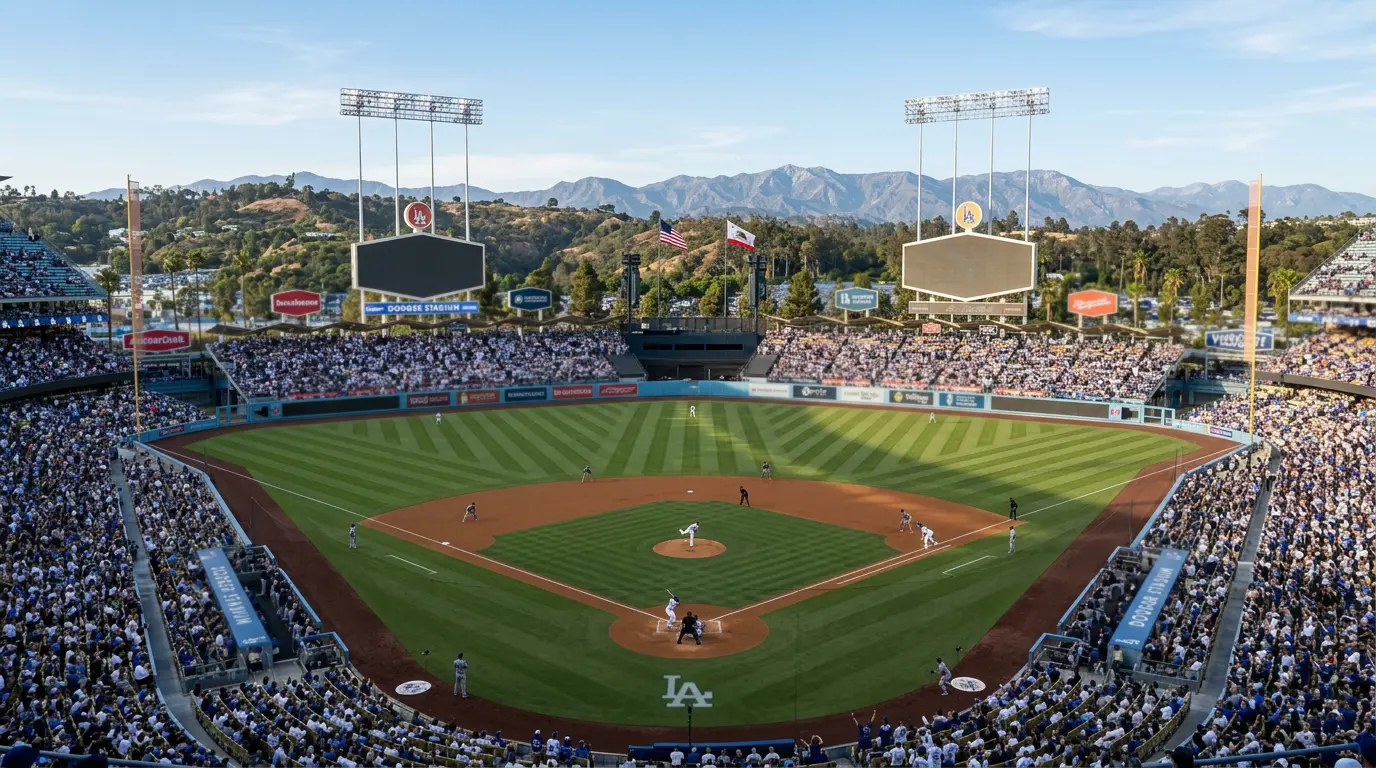
The Los Angeles Dodgers opened 2026 as +290 to repeat as World Series champions, with a regular-season win-total line set at 103.5. Those two numbers do a lot of work in this article. They tell you what the market thinks. They tell you what the market is willing to pay you for being right. And – most importantly – they tell you where the bias is concentrated, because heavy-favourite pricing always carries structural noise that careful UK punters can read.
This piece works through how Dodgers prices get set, what the 103.5 win-total line really implies, what historical base rates say about repeat champions, and where the prop and futures markets diverge from the moneyline grind.
Dodgers pricing context for UK punters
Los Angeles is the rare team that combines genuine on-field excellence with the kind of public profile that distorts pricing. The Yankees and the Mets carry public-money bias in the AL East and NL East respectively. The Dodgers carry it nationally and internationally, and the international piece matters more for UK books than people realise.
Shohei Ohtani’s 2024 season – .310 batting average, 54 home runs, 130 RBIs, 134 runs scored, 59 stolen bases, a 1.093 OPS, and 9.1 wins above replacement by FanGraphs measures – concentrated global betting attention on Los Angeles in a way no individual player has done in the modern era. UK volume on Dodgers games during seasons when Ohtani is healthy and producing is materially higher than on equivalent National League contenders. Books reflect that with sticky pricing.
What heavy-favourite pricing looks like in practice: the Dodgers as a -200 home favourite against a fourth-place division opponent is a price that almost no UK punter should be taking on the moneyline. The implied win probability is over 66%, the actual probability of winning a single regular-season game even for a strong club rarely exceeds 60%, and the juice between those numbers is the book’s profit. The Dodgers might win 100-plus games and still cost you money if you back them at heavy moneyline prices every night.
The runline at 1.5 changes the calculation. A Dodgers -1.5 runline at +110 to +130 is a different question, because you’re being paid even money or better for the team to win by two or more runs – which they do roughly 55% of the time when listed as moneyline favourites of -150 or shorter. That’s where the value sits for punters who insist on backing the team. UK books vary on how they price this, and the differences across operators on a typical night are wide enough to make line-shopping worthwhile.
What the 103.5 win-total line actually implies
A 103.5-win regular-season total is a serious number. Only a handful of teams in the past two decades have crossed 104 wins, and the path to that mark is unforgiving. Even one nine-game losing stretch – the kind every team endures somewhere in 162 games – costs you the over by itself if you’re tracking a 103-win pace.
The 103.5 line implies the market expects the Dodgers to play roughly .640 baseball across the full season. That’s elite. Sustained .640 baseball requires excellent injury luck, depth that absorbs inevitable rotation losses, and a bullpen that doesn’t crater in August. The Dodgers have the payroll edge, the depth chart, and the front-office pattern of mid-season acquisitions to make .640 plausible. But “plausible” and “more likely than not” are different propositions, and a typical -110 over price on 103.5 doesn’t necessarily reflect that gap.
What I look at instead: the over/under on individual months. UK books that offer monthly wins markets – and not all do – frequently price the early-season months at lines that don’t account for the way schedule strength gets back-loaded for contenders. April is often the easier path to overs. September, against a desperate slate of opponents and with rotation injuries piling up, is harder than the headline wins-pace suggests.
For UK punters thinking about the season-long ticket, splitting it across split markets – first-half wins, second-half wins, divisional wins – gives you partial outs and lets you hedge as the season unfolds. The straight 103.5 ticket is all-or-nothing in a way that tends to favour the book over time.
Repeat champion base rates and what they mean
This is the section that disciplined UK punters need to engage with seriously. The Dodgers as +290 to repeat sounds like a generous price for a team that just won the World Series, has the best roster in the league, and added more depth in the offseason. The historical record says otherwise.
The list of teams that have won back-to-back World Series in the modern era is short. The 1998-2000 Yankees did it across three years. Before that, you have to go back decades to find consistent repeat champions. The structural reasons are well-known – best-of-five and best-of-seven series introduce variance that even the best regular-season team can’t control, and the postseason pitching format compresses talent advantages. A team that wins 60% of its regular-season games doesn’t win 60% of its postseason series.
Translating that into price terms: +290 implies an implied probability of roughly 25.6%. The historical base rate for any team – even the strongest – winning the World Series in any given year hovers in the 6-12% range depending on regular-season strength. Repeat champions, looking only at teams that won the prior year, have hit roughly the 10-15% range. The Dodgers are clearly stronger than the average prior-year champion, which justifies a price meaningfully better than 10%, but +290 implying 25%+ is aggressive.
That doesn’t mean fade them automatically. It means the price is built on the market’s correct assessment of their dominance plus a public-money premium. The fairer ticket on Los Angeles repeating is closer to +400. UK punters who like the team for narrative reasons should be patient and look for moments – a slow April, an Ohtani injury scare, a mid-season slump – when the price drifts toward fair value before getting on.
Prop and futures edges across the season
The prop market on Dodgers stars is where I spend most of my season-long Dodgers betting time. Ohtani props in particular have a structural quirk: because he’s a two-way player whose pitching usage is managed carefully, his hitting prop pricing is sometimes set on assumptions that don’t account for how he’s used in any given week. Total bases overs on day games following day-off rotations are a quiet edge.
For pitchers, strikeout props on the Dodgers’ top starters are tightly priced on national TV games and looser on midweek matinees against National League opponents. UK punters with morning availability – when LA day games tip off late afternoon UK time – have an information edge over books that haven’t fully repriced from overnight news.
Division futures work differently. NL West futures on the Dodgers usually open at -200 to -250 on books that price them at all, which is too short for the value-conscious. The cleaner way to express belief in Los Angeles is through team season-totals, which carry less public-money weight, or through bet-and-hedge constructions on the World Series futures market.
For broader context on how heavy-favourite pricing works across the league, including the public-money tax on similarly-positioned clubs, this analysis on betting the Yankees from the UK covers parallel territory in the American League.
How often do reigning World Series winners hit their pre-season win total?
Does +290 to repeat reflect fair value historically?
Material created by the team DIAMONDLINE