Where I find most of my edge these days
Ten years ago I bet maybe two MLB props a week. Today, most of my staked volume is in props. The reason is simple – books got dramatically better at pricing the sides and totals on individual games, and player props became the place where the market still misprices regularly because there are too many of them to maintain perfect lines on.
That’s the practical truth of where the modern punter’s edge sits. Moneyline pricing on a Yankees-Astros game in mid-July involves three trading desks, public-money flow data, and a sharp-money tracking layer that closes inefficiencies inside an hour. The strikeout prop on the third reliever in that same game gets one trader’s attention twenty minutes before first pitch and never moves again. That asymmetry is the whole game.
What follows is the structure of MLB props as they appear at UK-licensed books, how the books price them, and the workflow I use to find the spots worth staking.
Player prop categories – what’s actually offered
The depth of player props at UK-licensed books has expanded considerably over the last three years, partly driven by demand from American handle that’s spilled across into UK markets. The standard menu now includes a fairly wide list, and I’ll walk through each cluster.
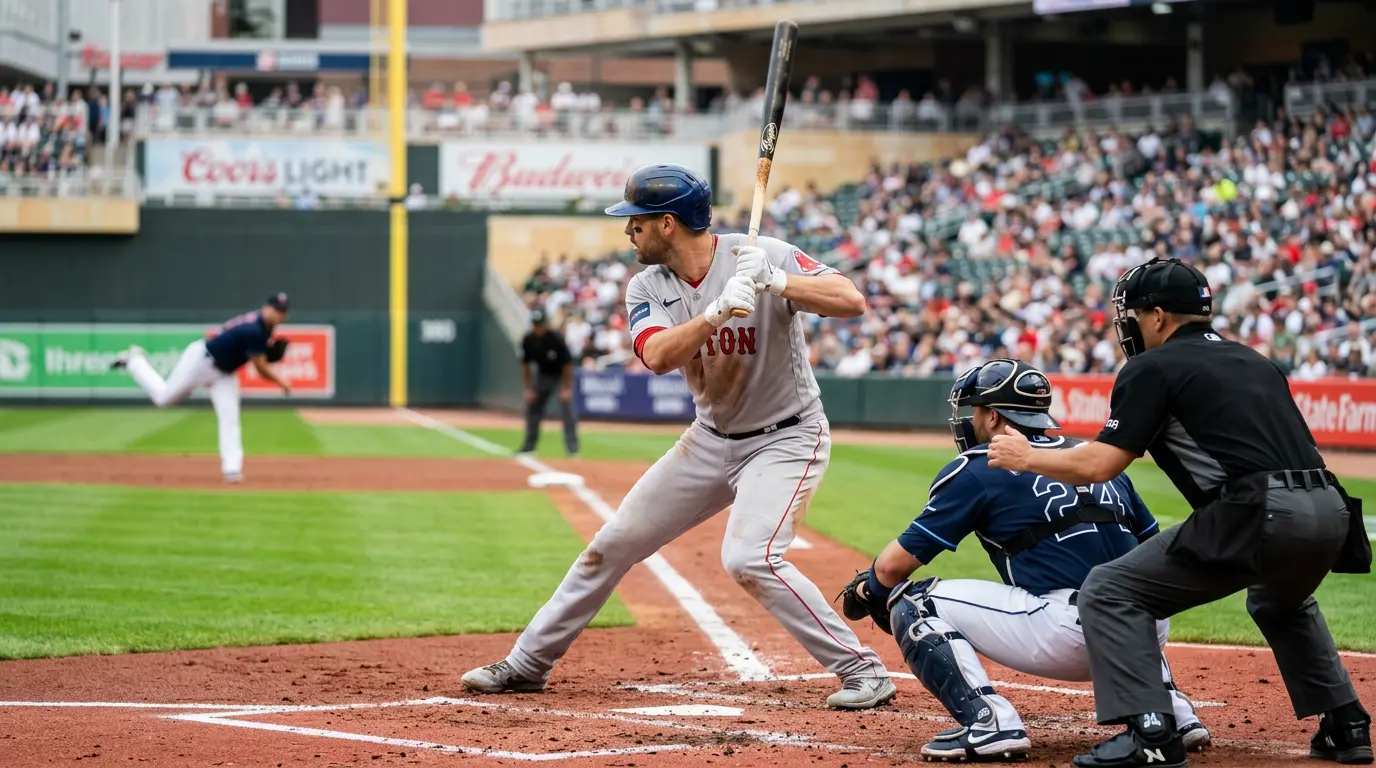
Hitter props divide into outcome props and accumulation props. Outcome props ask whether something happens at all – to record a hit, to hit a home run, to score a run, to drive in a run. Accumulation props ask how much – total bases over/under, hits over/under, runs scored over/under. The pricing on outcome props tends toward longer odds because the base rates are lower; accumulation props sit closer to even money because the lines are set to split the field.
Pitcher props split into rate-based and volume-based markets. Strikeouts over/under is the classic, and probably 70% of all pitcher prop volume runs through it. Outs recorded – a synthetic stat representing how deep the starter goes – is the second tier. Earned runs allowed and walks issued get listed but with thin liquidity. The 2024 rule package matters here: the pitch clock at fifteen seconds with bases empty and eighteen with runners (down from twenty seconds in 2023) and the four-mound-visit cap have nudged strikeout rates up across the league. Lines have caught up but not always by enough.
Specialty props are where the books often hand back value – and occasionally where they protect themselves with steep juice. First-to-score-a-run, first-to-hit-a-home-run, hits-and-runs combined, and “milestone” props for veterans approaching career numbers all live in this zone. Approximately 4.31% of UK accounts get restricted by operators over a twelve-month period for commercial reasons, and consistent specialty-prop winning is one of the patterns that triggers restrictions, so be aware that visibility on these markets brings scrutiny.
Game prop categories – beyond the headline
Game props sit between the binary (moneyline, runline, total) and the granular (player props), and they’re where I find some of the cleanest informational edges because they require synthesising several factors at once.
Total runs in the first inning is the headline game prop, and I’ve covered NRFI markets in detail elsewhere. Beyond that, you’ll see total runs in the first three innings, total runs in the first five innings, race-to-X-runs markets, exact-score and correct-score markets, and a long tail of “will-X-happen” specials.
The most consistently mispriced game prop in my experience is the “either team to score in every inning of the first three” market, when it’s listed. That outcome’s base rate is much lower than casual punters intuit, but the books have to price it attractively enough to draw action, so the value sometimes flips toward the under once you’ve done the maths on each starter’s first-time-through-the-order numbers.
Race-to-runs markets are interesting because they reward you for game-flow prediction rather than just outcome prediction. Backing the visiting team to reach three runs first against a slow-starting home pitcher with a tough lineup behind is a different bet from simply backing the visiting team’s moneyline. The settlement criteria are tight and the prices often reflect base rates without much adjustment for matchup – that’s where research pays.
One game prop I largely ignore: total team errors. The base rate is too compressed at modern infield-defence levels for the lines to offer real value, and the books know this and price the over short.
How props get priced – the vig is the story
Headline props look fairly priced until you look at the implied probabilities and add them up. A strikeout prop set at 7.5 with -120 over and -100 under translates to 54.5% over and 50.0% under in implied probability terms, summing to 104.5%. The 4.5 percentage points of overround is the book’s hold on that market.
| Market type | Typical hold range | Where the bias usually sits |
|---|---|---|
| Moneyline (sides) | 3 – 4% | Even – both sides priced symmetrically |
| Strikeout props | 4 – 6% | Bias toward over; public buys overs |
| Hits/total bases props | 5 – 7% | Bias toward over for star hitters |
| Home run scorer props | 10 – 15% | Heavy juice across the board |
| Specialty/novelty props | 10 – 20% | Wide hold reflects thin liquidity |
The bias toward overs on volume props comes from a recurring behavioural pattern: punters back the players they like to do well, and “doing well” reads as “more”. Books price that demand by shading the line up half a unit and juicing the over. The under on a power hitter’s total bases line is a frequent value spot, especially on the road and against pitchers with strong home splits.
Alternate prop lines are listed as well – same player, different threshold. A strikeout prop with the main line at 7.5 will usually have alternates at 5.5, 6.5, 8.5, 9.5 and sometimes further out. The juice is steeper at each remove from the main line, but the alternate lines closer to the main can offer better value than the main itself if your projection sits between two bracketed numbers.
The workflow I actually use
Here’s how a typical evening’s prop research breaks down for me. Roughly three hours before first pitch, I pull the projected lineups and confirm the starters. Without those, you’re betting blind. Lineup positions matter more than people credit – a hitter slotted seventh against a tough left-hander gets fewer plate appearances than the same hitter batting third, and that affects every accumulation prop on the card.
Two hours out, I check umpire assignments. Plate-umpire strike zones are publicly tracked and the differences between umpires are large – the most generous zones produce roughly 8% more called strikes than the tightest zones. That’s a meaningful nudge on strikeout props for both pitchers and the over/under on team strikeouts.
One hour out, I review weather. Wind direction and speed at outdoor parks. Temperature, because cold air carries less than warm air. Humidity, which subtly reduces home-run rates. The 2024 MLB regular season drew 71.3 million fans, with MLB.TV streaming at 14.5 billion minutes – meaning every park’s data is being watched and re-watched, so any meaningful weather edge usually works its way into prop lines within an hour of release.
Last thirty minutes, I cross-reference my projection against the line. If my model says a strikeout prop should be 7.0 and the book has it at 7.5, that’s a half-strikeout difference. After the juice, that’s value on the under. If I can find that same line at 8.5 elsewhere, the value’s even better. Line shopping across UK-licensed books is the single highest-leverage habit a serious prop bettor can build. I treat the bookmakers as a market, not a destination.
What separates the punters who profit on props from those who don’t isn’t the model. It’s the discipline of skipping the games where nothing offers value. On most nights, I take three to five prop positions out of fifteen MLB games. Most nights have ten games where I have no opinion and pass entirely.
For a deeper look at one specific prop category that pays differently from the others, my breakdown of how MLB home-run prop bets work and where park effects distort the lines covers the longest-odds prop on the menu and how to read it.
Why are alternate prop lines often a better value than the main line?
Do MLB props void if a starting pitcher is pulled after one inning?
Material created by the team DIAMONDLINE